In this article: Why embedded AI support inside Bud is more useful than generic AI tools when learners get stuck | 9 minute read. Most quest...

Last updated March 27, 2026
In this article: The rise of AI and what it really means for apprenticeship and funded training providers.
| 4 minute read.
Artificial intelligence (AI) has steadily advanced over the last decade, with 2023 marking a breakthrough moment. No longer confined to tech specialists, for the past three years organisations in every sector have been exploring ways to use new AI tools – including training providers.
We’re starting to see AI heralding change in the apprenticeships and funded skills space. For learners, AI tools can tailor training to their specific needs and act as a round-the-clock coach to provide instant support and guidance. For providers, AI can be a valuable co-pilot, helping to reduce admin burden, streamline processes and save costs.
However, the sheer pace of development has created hesitation around AI. A lot of providers we talk to still feel somewhat overwhelmed - unsure of which tools can be trusted and confused about ‘where to start’.
Increasingly, the most effective approach is to embed AI capabilities directly into the platforms, tools and workflows that providers already rely on to manage their delivery and their learners. By integrating the technology in this way, providers are beginning to realise the benefits of automation and AI insights, while maintaining the oversight and governance our sector requires.
The current AI-Productivity-Investment wave
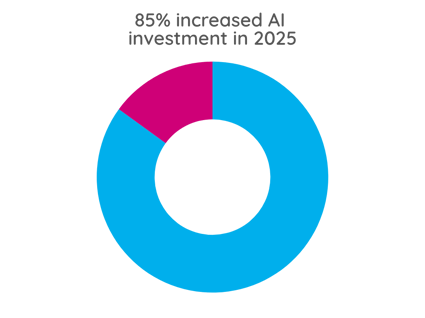
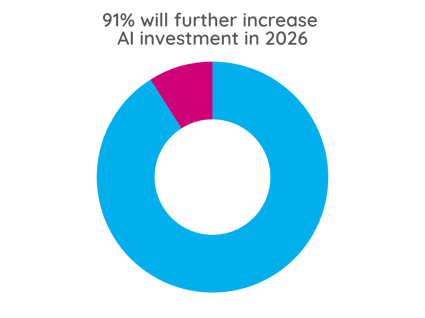
Over the past two years, investment in AI has increased rapidly across industries. According to 2025 research from Deloitte, 85% of organisations increased their AI investment over the past 12 months, and 91% plan to increase it again during 2026.
20% of UK businesses remain in the ‘early stages’ of AI adoption, and while education as a broader sector is among the more active adopters of AI, 76% of organisations are using it only selectively or minimally (The State of AI Adoption in UK Businesses, 2026).
This aligns with what we’re seeing across the training provider landscape, and reflects the sector's caution around the real-world value of AI without the appropriate data, context and governance in place.
In sectors like funded skills – where government policy complexity, funding rules and regulatory constraints play a significant role – precision and accuracy are critical.
For training providers, the question is no longer whether AI will play a role in delivery, but how it can be applied responsibly within the realities of funded learning.
So how should training providers proceed?
Providers operating in the funded learning space work within strict regulatory and funding frameworks, with delivery models being shaped by DfE funding rules, evolving government policy, and stringent quality and Ofsted requirements. This environment introduces several risks unique to our sector that need to be carefully managed by providers looking to introduce or adopt new AI technologies.
We are seeing that AI adoption in funded learning is happening at a more considered pace than in many adjacent sectors with fewer compliance constraints.
In funded skills, systems of record (such as end-to-end training management platforms and ePortfolio systems) are becoming more important – not less. AI without accurate data or operational context is unreliable and presents a high-risk. Rather than replacing providers’ core systems, AI will increasingly augment them – drawing on their structured data, embedded workflows, and regulatory context to deliver meaningful value.
In practical terms, this means AI can support providers in areas such as reducing administrative workload, improving visibility across learner progress and performance, and enabling more informed decision-making through data-driven insights.
It can also help providers to deliver more personalised learning experiences, elevate inclusion by identifying learners who require additional support, and surface operational insights that would otherwise remain hidden within complex datasets.
Human oversight will remain essential. In our operating environment, providers must be able to demonstrate clear accountability for delivery, evidence, and outcomes.
The most effective AI solutions for training providers in the funded space will be those that integrate directly into the systems they already rely on to manage delivery, compliance, and learner progress. Ultimately, AI is most effective when it amplifies the impact of tutors and training teams, rather than replacing them.
And you don’t need to be an expert to start using AI. Bud’s powerful tools are designed to make AI accessible and understandable, helping you save time, improve quality and enhance learner outcomes. Get in touch with your Customer Success Manager or Book a Discovery Call today to learn more about how our AI-powered tools Bud Mark and Bud Assist can support your organisation.

Related resources
.png)
Last updated July 1, 2026

Last updated June 15, 2026
In this article: Agentic AI is shifting funded learning from reactive support to proactive delivery intelligence. Here’s why providers need ...
Last updated August 6, 2026
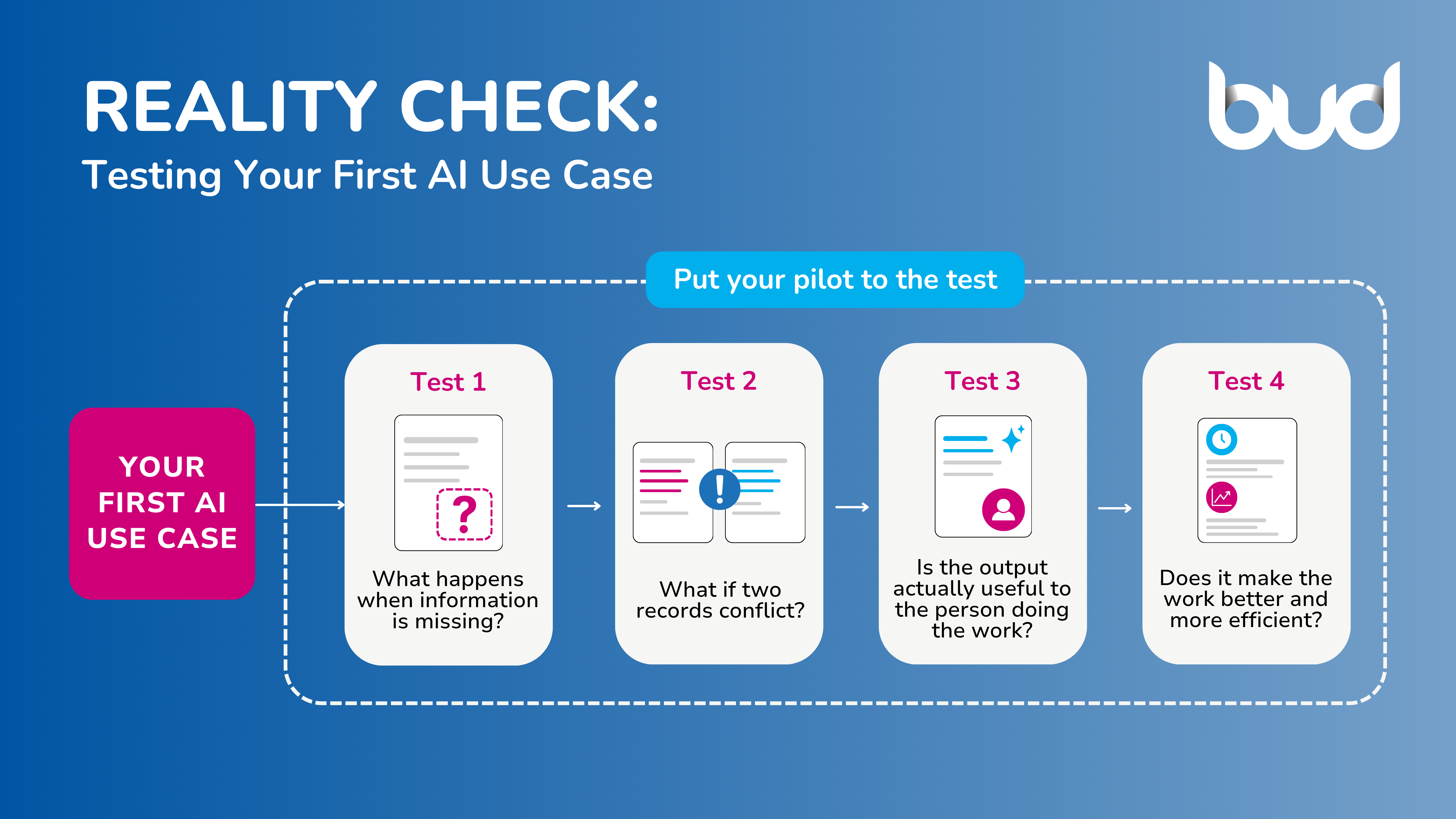
In this article: You’ve chosen your first AI use case. Now it’s time to involve the right people, test it properly, and determine whether th...